The Wall Street Journal
As many as 30 U.S. states are considering joining forces to look into how Google Inc.'s Street View vehicles came to collect Internet users' personal data from unsecured wireless networks.
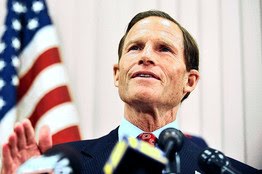
The joint investigation, led by Connecticut Attorney General Richard Blumenthal, will seek additional information from Google and determine whether laws may have been broken when the company mistakenly collected information on people's Web usage.
Mr. Blumenthal said in an interview that a "core group" of state attorneys general had agreed to combine their resources and expertise to look into the matter. He said more than 30 states had expressed interest in the matter, and he expected a "significant group" of states will ultimately join the investigation. He declined to be more specific.
Google in May acknowledged that its Street View vehicles for years had inadvertently collected data over public Wi-Fi networks—such as fragments of Web pages and email messages—while marking the location of the Wi-Fi networks and taking pictures for its online mapping service.
The company has said that while it was a mistake to collect the personal data, it doesn't believe it has done anything illegal. A Google spokesperson Monday said that the company continues to work with relevant authorities to answer their questions and concerns.
Mr. Blumenthal said his investigation was at an early stage, and he declined to challenge Google's assertion that it didn't break any laws. "They certainly acknowledge, at the very least, that intercepting and gathering people's data was wrong," he said. "There may be a need to strengthen and enhance federal and state laws."
The multistate investigation is the latest development in a growing privacy controversy that has rippled around the world. The Internet giant, which is based in Mountain View, Calif., has blamed the mistake on an experimental piece of software accidentally used in its signal-collection software. The company has hired an Internet security firm to look into the software error.
A Democratic candidate to succeed Sen. Chris Dodd (D., Conn.), Mr. Blumenthal said Google's response so far raises as many questions as answers. He said the company must provide a comprehensive explanation of how the unauthorized data collection happened, why the information was kept if collection was inadvertent and what action will prevent a recurrence.


